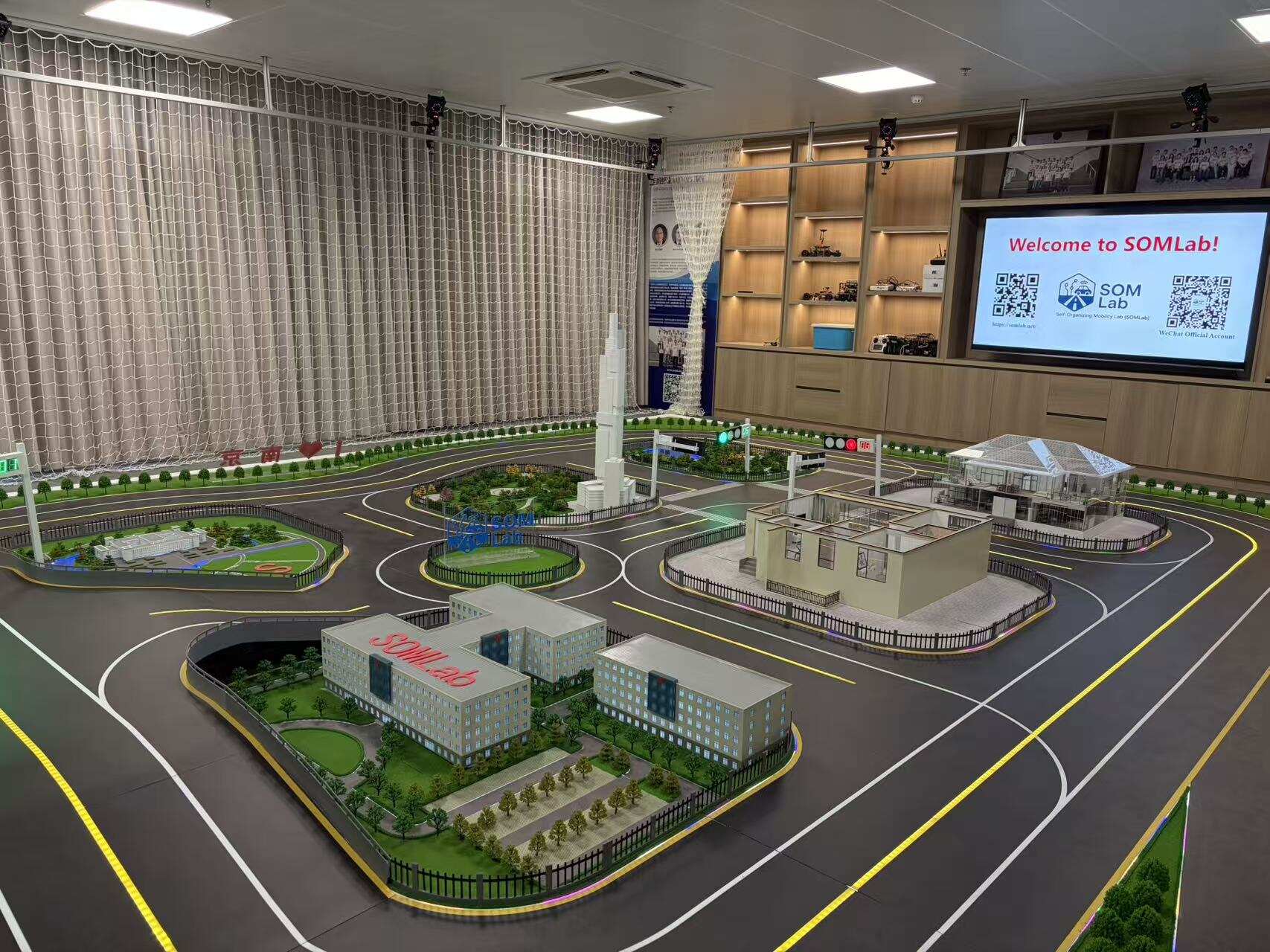
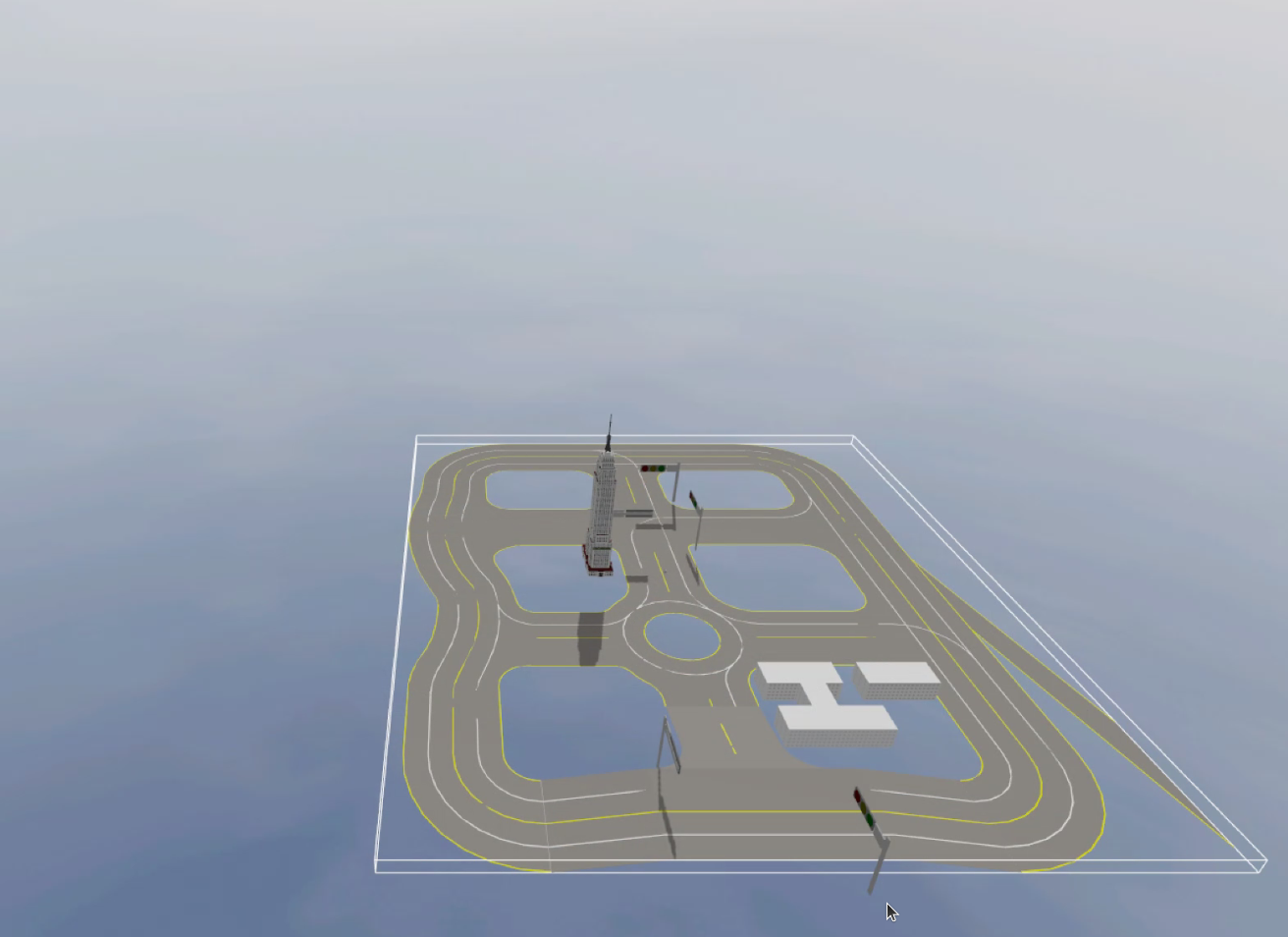
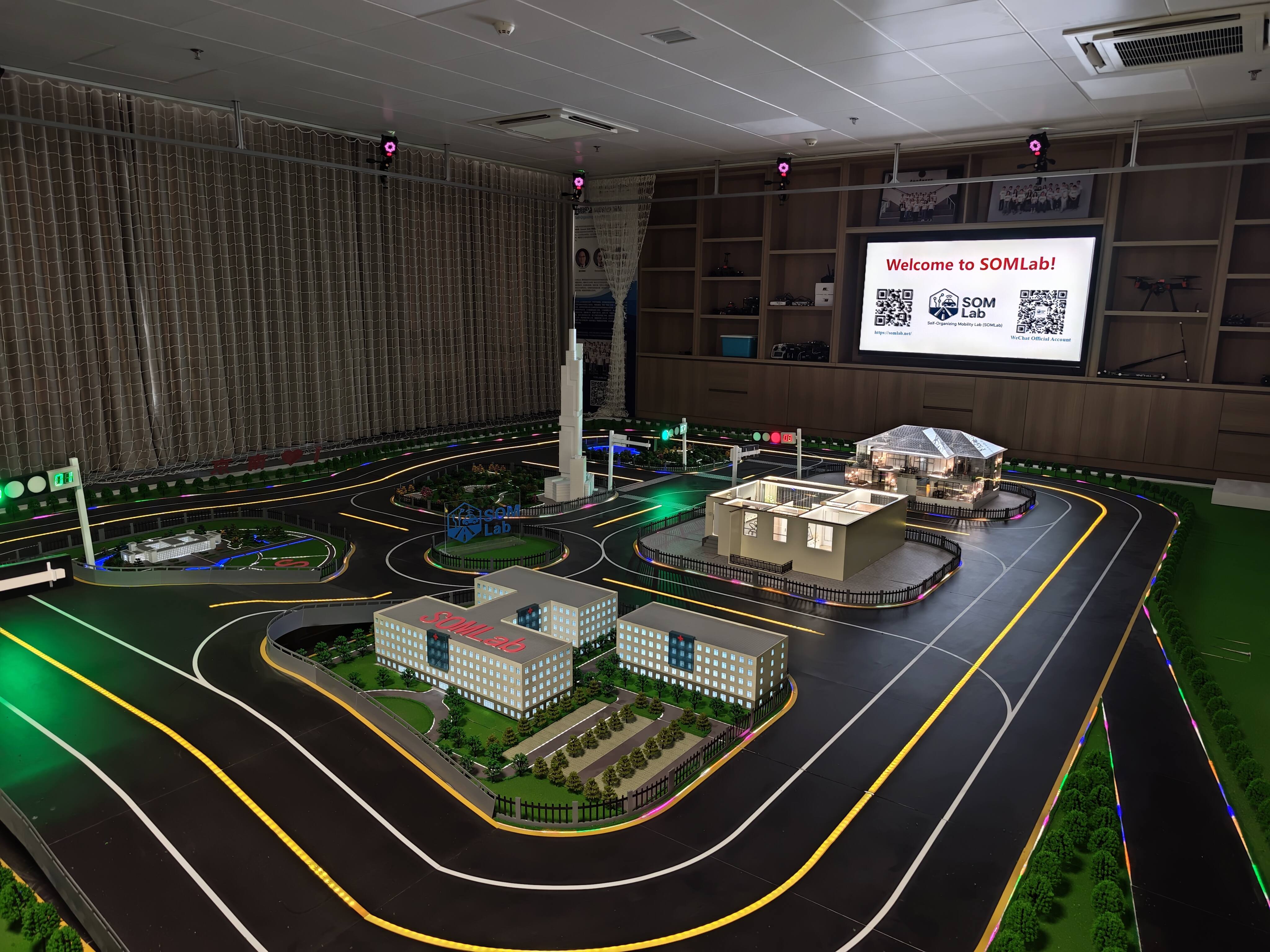
Self-Organizing Mobility Lab (SOMLab)




The Self-Organizing Mobility Lab (SOMLab) is dedicated to advancing the science and engineering of self-organization, intelligent coordination, and adaptive autonomy in complex dynamical systems. Grounded in systems science and integrating control theory, artificial intelligence, and swarm intelligence, the Lab develops fundamental theories and enabling methodologies for next-generation mobility systems endowed with adaptive, self-learning, and explainable capabilities. Through an integrated research framework spanning perception, decision-making, coordination, and evolution, SOMLab addresses the fundamental challenges of autonomous cooperation, planning, and decision-making in large-scale heterogeneous multi-agent systems operating in open, uncertain, and dynamic environments.
As a highly international and forward-looking research platform, SOMLab is committed to the highest standards of academic excellence and global scientific impact. The Lab has established extensive and sustained collaborations with leading institutions worldwide. Its core research areas include adaptive control and learning systems, nonlinear control, cooperative control, swarm intelligence, explainable artificial intelligence, and intelligent decision-making theory. Guided by a vision that emphasizes both theoretical rigor and practical relevance, SOMLab seeks to bridge foundational advances in systems and control with transformative applications in emerging technological domains. Its research is particularly driven by pressing challenges in connected and autonomous vehicles, low-altitude economy applications, cross-domain unmanned systems, intelligent transportation systems, smart buildings, and smart energy systems.
Research Areas
Embodied Intelligence, Adaptive Robotics
Advanced Air Mobility, Low-Altitude Economy
User-Centric Building Automation